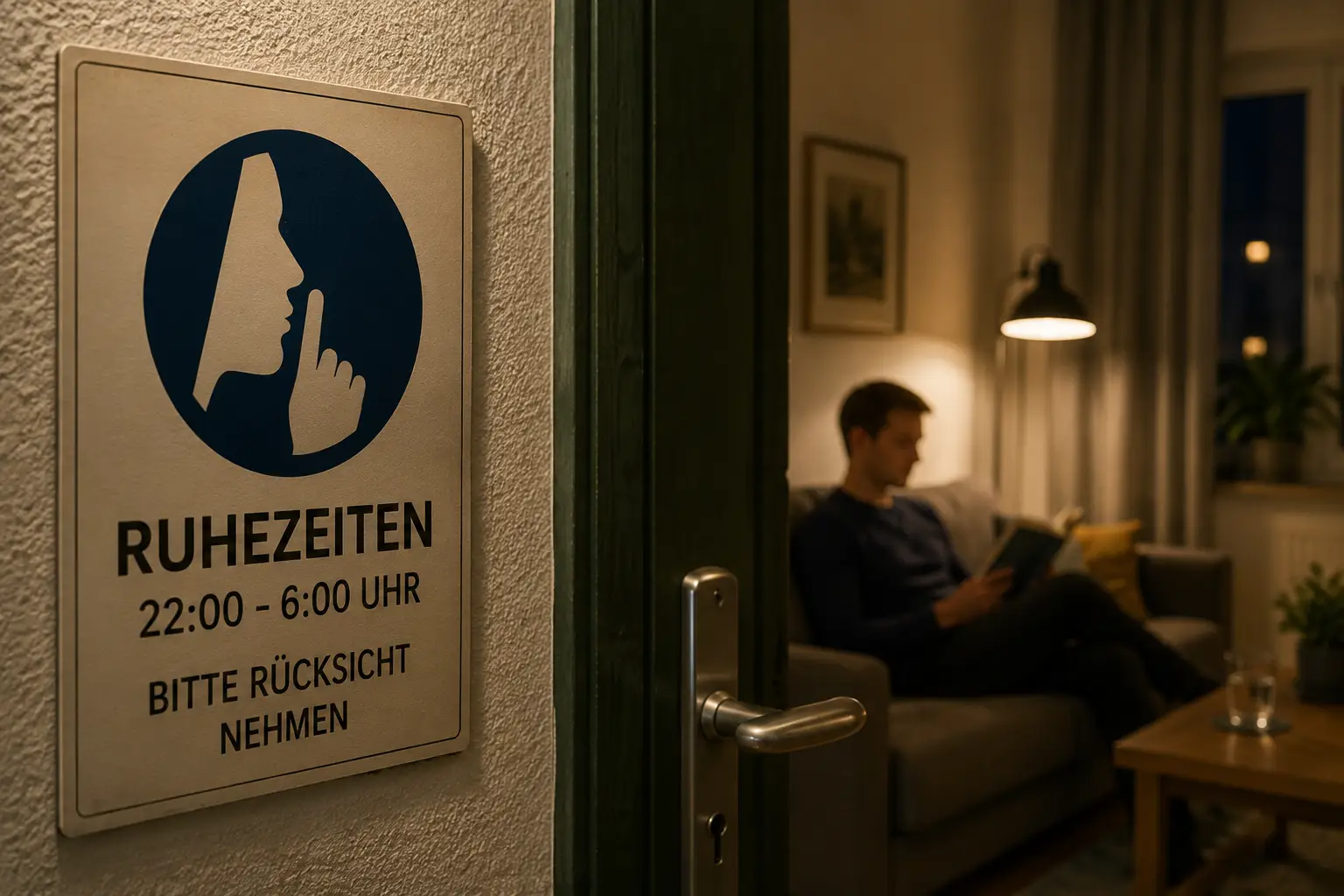
Germans Take Quiet Hours can look surprising from the outside, but its meaning becomes clearer when history, place and everyday social rules are considered together. This guide explains germans take quiet hours with context rather than stereotypes.
Germans Take Quiet Hours: meaning and cultural context
- Germans Take Quiet Hours can vary by region, family, faith and generation.
- The custom may look different today than it did a generation ago.
- One striking practice should never be treated as a rule for every person in a country.
t is 10:05 on a weeknight in a German apartment building. Someone starts drilling into a wall. A door opens somewhere along the hallway. A neighbor may appear, not because the drilling is merely annoying, but because a familiar boundary has just been crossed.
In Germany, Ruhezeiten, or quiet periods, are taken seriously because silence at certain times is widely treated as part of living considerately with other people. The idea is reinforced by noise laws, local regulations, rental agreements and house rules. But there is an important detail outsiders often miss: Germany does not have one universal rule saying that every person everywhere must be silent during exactly the same hours.
Instead, quietness is protected through overlapping rules and a broader expectation of Rücksichtnahme, meaning consideration for others.
Quiet Hours Do Not Mean Absolute Silence
The German word Ruhezeit suggests a period of rest, but nobody is expected to stop walking around their apartment or living a normal life.
What changes is the amount of avoidable noise considered reasonable.
Activities such as loud music, drilling, hammering, moving furniture or holding a noisy party can become a problem when they disturb neighbors, particularly at night. In Berlin, for example, official rules protect nighttime quiet from 10 p.m. to 6 a.m. and give additional protection to Sundays and public holidays. Other states and municipalities can have their own regulations.
Rental contracts and building rules can add another layer. A landlord or condominium association may establish particular quiet periods for residents, provided those rules are legally permissible.
So the famous German “quiet hours” are better understood as a system rather than a single national curfew.
Why 10 P.M. Feels Like a Real Boundary
In many parts of Germany, 10 p.m. marks the beginning of legally significant nighttime noise protection.
That does not mean every sound after 10 becomes illegal. The question is whether the noise unreasonably interferes with other people’s ability to rest.
Berlin authorities, for example, specifically warn against loud conversations, music, parties and other noise that can disturb neighbors during the protected nighttime period. They also recommend keeping unusually loud activities out of nighttime hours whenever possible.
This creates something visitors may notice quickly: people often lower music, move conversations indoors or become more careful on balconies as the evening gets later.
The clock matters because everyone knows approximately when the social expectation changes.
Sunday Is Different
German quiet culture becomes especially visible on Sunday.
The protection of Sunday as a day of rest goes deeper than apartment etiquette. Germany’s Basic Law incorporates a provision from the Weimar Constitution stating that Sundays and officially recognized public holidays are legally protected as days of rest from work and spiritual reflection.
Modern Germany is religiously diverse and increasingly secular, so Sunday quiet should not be understood simply as a religious rule. Over time, the protected day of rest has also become a social institution.
That helps explain why starting a lawn mower on a Sunday can feel more serious than doing the same thing on a weekday.
Federal regulations restrict many outdoor machines in residential and other noise-sensitive areas throughout Sundays and public holidays, as well as between 8 p.m. and 7 a.m. on working days. Some particularly noisy equipment faces additional restrictions.
The result is a noticeable change in rhythm. Shops may be closed, household projects pause, and residential neighborhoods can become unusually calm.
What About the Famous Afternoon Quiet Period?
This is where the stereotype becomes misleading.
Visitors sometimes hear that Germans observe a nationwide Mittagsruhe, or afternoon rest period, often around 1 p.m. to 3 p.m.
There is no single nationwide legal afternoon quiet period for ordinary household behavior.
Berlin’s government explicitly notes that a legally mandated general midday quiet period does not exist there, although such a period may appear in rental agreements or building rules.
Certain specific regulations can still use midday periods. Federal noise rules for some types of outdoor machinery, for example, restrict their operation during particular daytime windows. Rules governing sports facilities also distinguish certain daytime “rest periods.”
This is why two Germans can give different answers when asked, “Are you allowed to vacuum at 2 p.m.?”
They may live under different house rules.
Why Formalize Something as Ordinary as Noise?
Part of the answer lies in shared space.
In an apartment building, one person’s music, renovation project or washing machine can become another person’s background noise. Germany’s noise framework makes the principle of mutual consideration more predictable.
Rather than requiring neighbors to renegotiate acceptable behavior every evening, the rules establish periods when rest receives greater protection.
Germany’s Federal Environment Agency notes that noise can interfere with communication, relaxation, concentration and psychological well-being. It also identifies neighborhood noise as an important source of annoyance after road traffic.
Quiet hours therefore serve a practical purpose. They create a shared expectation that the person producing avoidable noise bears more responsibility at particular times.
Why Neighbors Sometimes Enforce the Rules Themselves
A visitor may be surprised by how quickly a German neighbor complains about noise.
This is sometimes interpreted as personal hostility. Often it is something less dramatic.
When a community has clearly understood rules, pointing out a violation may feel more like defending a shared agreement than starting a conflict. The neighbor who knocks on the door at 10:30 may believe that the question was already settled long before either person moved into the building.
That does not mean every German behaves this way. Some neighbors tolerate parties. Others are extremely sensitive. Students in a busy city center may experience quiet hours very differently from families in a small residential town.
German cities are not silent, either. Berlin nightlife alone makes that obvious.
The important distinction is between places where noise is expected and spaces where people reasonably expect to rest.
Quiet Hours Are Also About Predictability
The deeper cultural idea is not really silence.
It is predictability.
You can renovate your apartment, but there are better and worse times to use the drill. You can celebrate a birthday, but telling neighbors beforehand does not automatically grant permission for unlimited nighttime noise. Berlin authorities specifically note that announcing a party is not a free pass to disturb others.
This creates boundaries around competing freedoms.
One resident wants to enjoy music. Another wants to sleep. Neither desire is unusual. Quiet-hour rules attempt to decide when one interest should give way to the other.
For people accustomed to solving noise disputes informally, the German approach can seem unusually regulated. From inside the system, however, the regulations can reduce uncertainty.
Everyone knows when extra consideration is expected.
Frequently Asked Questions
Are German quiet hours the same everywhere?
No. Federal rules cover certain types of noise, while states, municipalities, rental contracts and house regulations can impose additional requirements. Nighttime protection around 10 p.m. is common, but specific rules should be checked locally.
Can you shower after 10 p.m. in Germany?
Normal necessary household activity does not simply become forbidden at 10 p.m. Quiet-hour rules are aimed at unreasonable disturbance, not at preventing ordinary life.
Can you have a party during quiet hours?
You can celebrate, but excessive noise that disturbs neighbors may violate applicable rules. Informing neighbors beforehand is considerate, but it does not cancel noise restrictions.
Is Sunday really a quiet day across Germany?
Sunday has strong legal protection as a day of rest, and federal regulations prohibit the use of many outdoor machines in residential areas on Sundays and public holidays. The precise restrictions on other activities vary.
Germany’s quiet hours can look rigid from the outside because something as ordinary as drilling a hole or playing music suddenly becomes connected to rules and clocks. But behind those rules is a recognizable human problem: how do millions of people live close together while still giving one another space to rest?
The German answer is not complete silence. It is the idea that sometimes your neighbor’s right to quiet begins with your decision to wait until tomorrow.
Further cultural context
To keep germans take quiet hours in perspective, explore related Daily World Culture stories and UNESCO Intangible Cultural Heritage. Strong cultural research compares sources, regions and generations instead of treating one memorable detail as universal.