
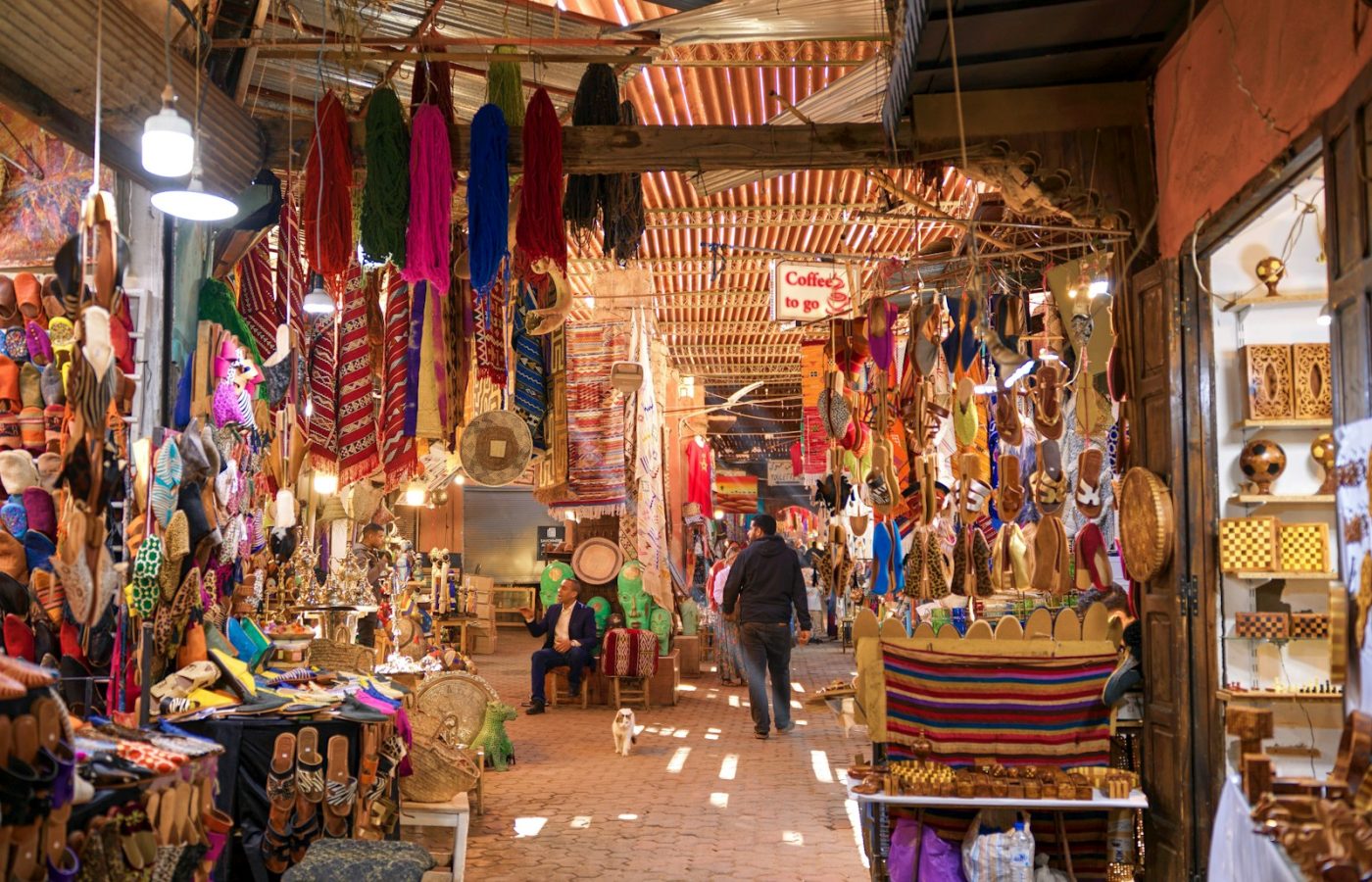
Henna Means Moroccan Celebrations can look surprising from the outside, but its meaning becomes clearer when history, place and everyday social rules are considered together. This guide explains henna means moroccan celebrations with context rather than stereotypes.
Henna Means Moroccan Celebrations: meaning and cultural context
The most interesting cultural details are often the ones that look ordinary to the people who live with them. What Henna Means at Moroccan Celebrations is a good example. Henna can appear at weddings, family celebrations and other special moments as both decoration and symbol. This article looks beyond the quick “fun fact” version and asks what the custom communicates, where it changes, and how an outsider can understand it without turning people into stereotypes.
- What people may actually notice in everyday life
- Why the custom has social meaning beyond the visible ritual
- Where regional, family and generational differences matter
- How to observe the tradition with curiosity rather than assumptions
The detail that makes this custom interesting
At first glance, What Henna Means at Moroccan Celebrations can look like a single rule or picturesque tradition. In practice, it belongs to a wider world of living traditions. The useful clues are often in how repeated practices connect memory, identity, place and community. Traditions survive because people adapt them, argue about them and choose what to carry forward. That is why the same custom may feel formal in one setting and casual in another, or important to one generation and optional to the next.
Instead of asking whether “everyone” follows the custom, a better question is what the practice communicates when it appears. It may signal welcome, respect, memory, celebration, practicality or group belonging. The meaning comes from the relationship between people, not only from the object, gesture or food that an outsider notices first.
Henna is older than the tourist image
The plant has a long history across North Africa, the Middle East and South Asia. In Morocco, designs and occasions vary by community, artist and family tradition.
Celebration and protection can overlap
Henna may be associated with beauty, blessing, good fortune or protection in popular tradition. Not everyone interprets the symbolism in exactly the same way.
The social moment matters
Applying henna can create a gathering in which women, relatives and friends spend time together before a larger celebration. The process itself can be part of the memory.
For visitors
Henna offered in a tourist square is a commercial service, while henna used in a family ceremony has a different context. Separating those settings prevents a decorative motif from being mistaken for the whole tradition.
Context matters more than a rulebook
Morocco is culturally diverse across cities, regions, Amazigh communities, Arab-speaking communities, rural areas and generations. A practice described in one family should not automatically be treated as a national rule.
This matters because culture articles often become misleading at the exact moment they become too confident. A visitor sees one household, one wedding, one market or one café and turns it into a rule for millions of people. A better approach is to treat each example as evidence of a pattern, then leave room for people who do it differently.
What an observant visitor might notice
Watch the rhythm around the custom. Who begins it? Who is expected to respond? Is the action repeated? Does age or familiarity change the tone? Are there different versions in a home, a public place and a formal event? Those small observations usually reveal more than memorizing a list of dos and don’ts.
You may also notice that people themselves explain the tradition in different ways. One person may emphasize religion, another family memory, another practicality, and another simply habit. Those explanations do not have to cancel one another out. Living culture often carries several meanings at the same time.
Where outsiders often get the story wrong
The first mistake is to confuse visibility with universality. A colorful ritual photographs well, so it can appear more central online than quieter routines that happen every week. The second mistake is to treat older traditions as if they are untouched by cities, migration, education, social media, tourism and changing family structures. The third is to assume that people who do not follow a custom are somehow less authentic.
A more accurate cultural story keeps the surprising detail but removes the exaggeration. It explains what is common without pretending it is compulsory, names the setting, and distinguishes a family preference from a legal or religious requirement. That extra precision makes the story more useful and more interesting.
How the tradition changes over time
Traditions are not preserved by standing still. They survive because people adjust them to new homes, new schedules, new technology and new ideas about identity. Some elements become more ceremonial, some become simpler, and some return in a new form because younger people decide they matter. A practice can therefore be both old and contemporary at the same time.
This is especially visible when families move between regions or countries. A custom may be kept more deliberately in the diaspora, blended with another community’s habits, or reduced to one symbolic element that still carries emotional weight. Looking at change does not weaken the tradition; it shows how people keep it alive.
How to approach it respectfully
If you encounter the custom in real life, you do not need to perform expertise. Start with a greeting, observe what others are doing, accept correction lightly, and ask a simple question when the setting allows it. People generally know the difference between respectful curiosity and someone treating their daily life as a spectacle.
Photography deserves particular care. Public festivals may invite cameras, while homes, religious spaces and intimate family moments may not. Ask before photographing people closely, and remember that the most meaningful part of a cultural experience may be the conversation you do not turn into content.
Why this detail is worth remembering
The value of What Henna Means at Moroccan Celebrations is not that it gives us an exotic fact to collect. It offers a small window into how people create belonging and make ordinary life meaningful. Once you understand the context, the custom stops looking strange for the sake of being strange. It starts to look logical inside the relationships, history and expectations that produced it.
That shift, from “that is unusual” to “now I can see why it matters”, is the goal of Daily World Culture. Curiosity brings us to the story; context is what makes the story worth keeping.
Frequently asked questions
Does everyone follow this custom?
No cultural practice is followed in exactly the same way by everyone. The article describes recognizable patterns, while region, family background, age, belief, class and personal preference can change the details.
Is it okay for visitors to participate?
Often yes when participation is invited, but the setting matters. Follow the host or organizer, ask when unsure, and avoid turning a meaningful ritual into a performance for a photograph.
What is the best way to learn more?
Compare several local perspectives, notice how people describe the custom themselves, and read about the history of the specific region rather than relying on a single viral list. Good cultural understanding grows from multiple contexts.
Further cultural context
To keep henna means moroccan celebrations in perspective, explore related Daily World Culture stories and UNESCO Intangible Cultural Heritage. Strong cultural research compares sources, regions and generations instead of treating one memorable detail as universal.